
Rate Matrices and Driver Assignments
Rate matrices supply the dollar amounts base-pay rules look up. Driver assignments connect individual drivers to a pay program (and an experience tier) for a date range. Both are managed under Driver Pay.
Rate matrices
A rate matrix is a named table of pay rates. Each row is a rate for a slice of work, typically defined by:
Mile Start / Mile End — the mileage band
Experience Tier — which driver tier this rate applies to
Rate — the dollar amount (per mile, flat, or whatever the referencing rule expects)
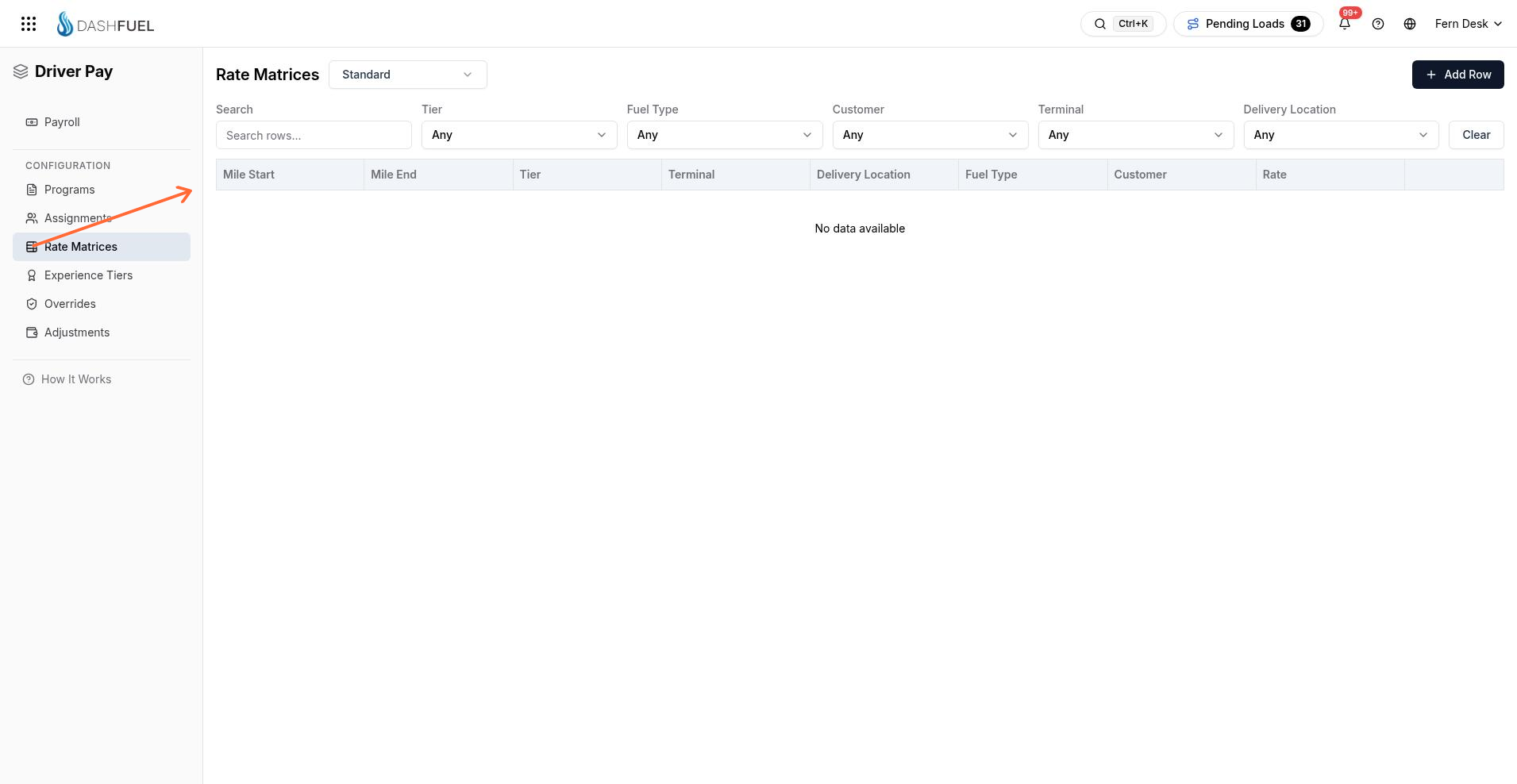
Rows can also be narrowed by terminal, delivery location, fuel type, or customer when you need lane- or product-specific rates. When a base-pay rule runs a matrix lookup, DashFuel finds the row matching the delivery's miles, the driver's tier, and any other filters, then returns that rate.
Matrices are reusable — one matrix can back base-pay rules across several programs — so most companies keep a small set of shared matrices rather than one per program.
Driver assignments
An assignment puts a driver on a program for a window of time:
Driver and Program
Experience Tier — used by matrix lookups and tier multipliers
Start and optional End dates
Status — Active or Expired
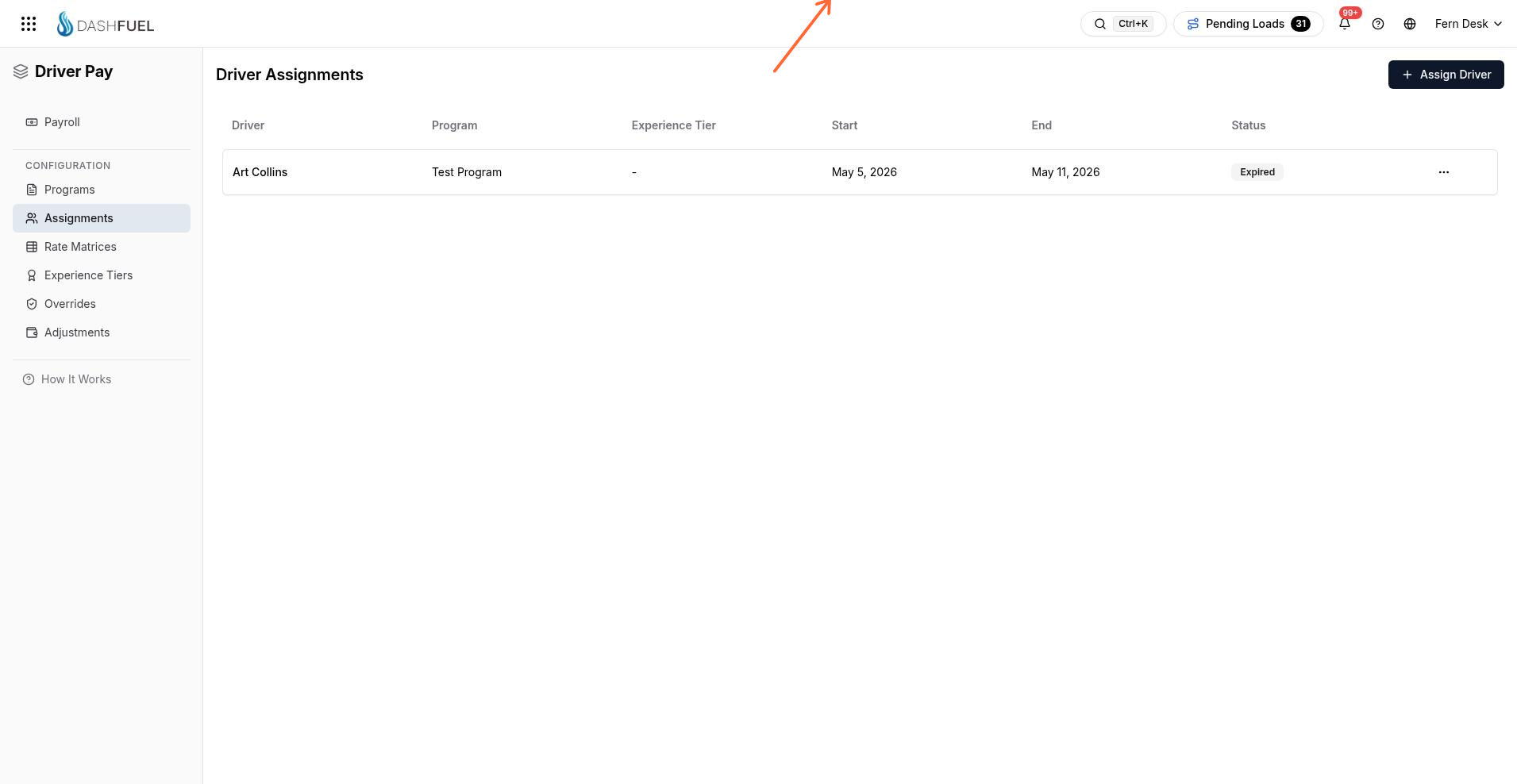
Assignments are the highest-priority way a delivery picks its program. If a driver has no assignment covering the delivery date, DashFuel falls back to a default program whose eligibility includes that driver.
End Assignment closes the window so future deliveries stop using that program. Past deliveries keep the program they settled under — changing or ending an assignment does not rewrite history.